Interior Design Marketing Strategy: Made Simple
You went into interior design because you're passionate about home interiors. In your head you're already reconfiguring the layout, extending a wall, adding a built-in, imagining the design touches that will transform it to a dream living space. As an art form, interior design can move us on many levels — it affects our wellbeing, our mindset, our energy levels.
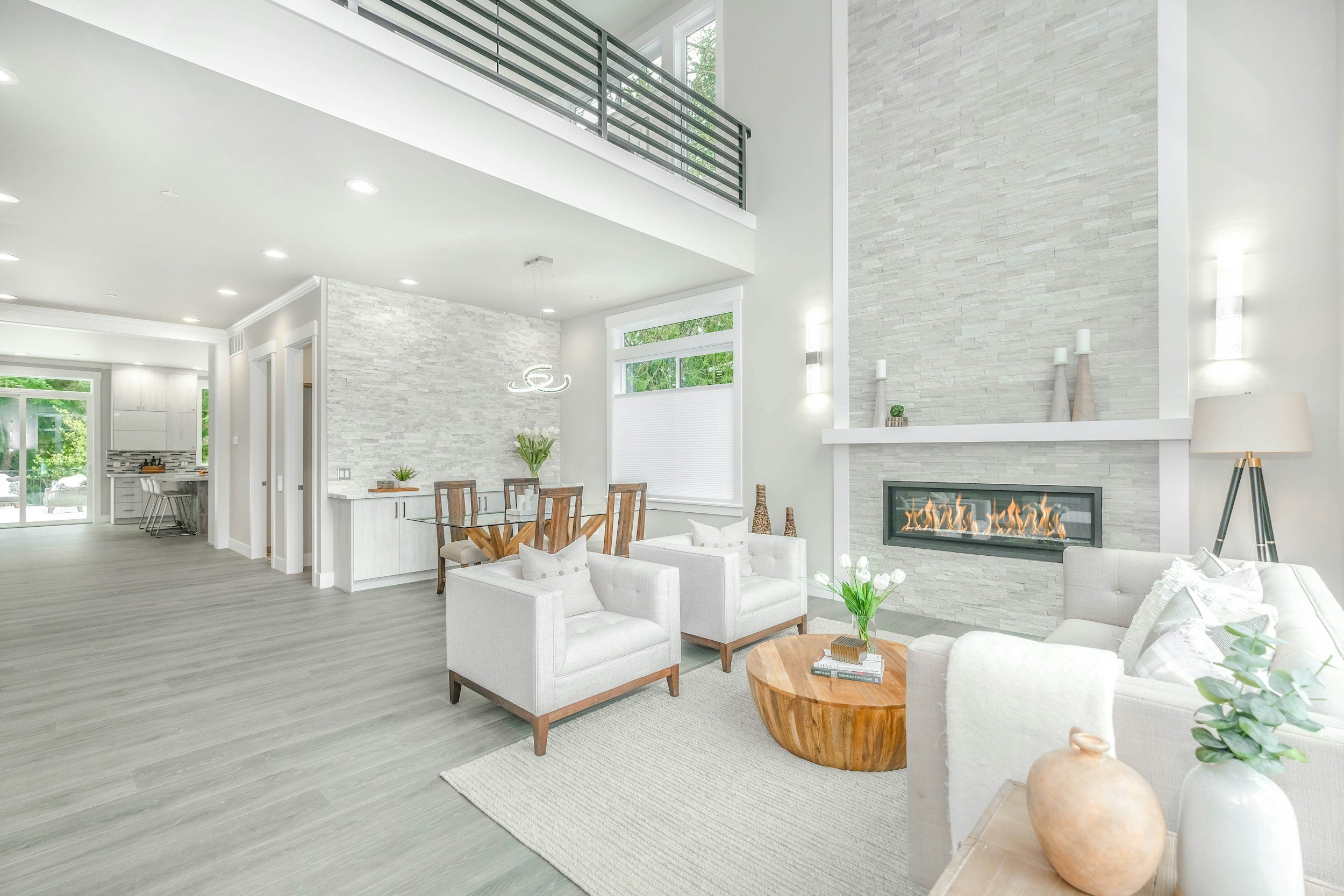
You dream of becoming the next Sophie Paterson, Shea McGee or Kelly Hoppen.
.
You're eager to put your design prowess to the test, make your mark and see where your interior design journey takes you. You can't wait to realise all those creative ideas that have been floating around in your head for an age. Design lights you up. So why does marketing feel like such a treadmill?
Stuck on a Social Media Hamster Wheel?

You feel stuck on a hamster wheel, watching too many reels on how to grow your Instagram, gain followers and up your game etc. Must post x number of posts per day on Pinterest, Instagram and LinkedIn.
You're juggling Pinterest, Instagram, Facebook, TikTok, Threads and X. Learning Canva, creating reels, becoming a videographer and five-star photographer — all on top of designing in SketchUp, AutoCAD and Adobe and keeping up with the latest software updates.
You could work full-time on social media alone. But you don't have that time. You are wearing so many hats to market your interior design services, it's exhausting. Interior design — the thing you love and excel at — is getting pushed further and further down the pile.
You've considered Google Ads to boost visibility, but as an ongoing strategy the cost is hard to justify and Facebook Groups feel like a very long game. Sound familiar?
And yet, while you're pouring your energy into social media, social media accounts for as little as 5% of average website traffic — and even the most generous recent estimates put it at around 10% globally. Organic search meanwhile drives 53%. According to BrightEdge research the numbers tell a very different story to the one Instagram would have you believe.
Simplify Your Interior Design Marketing

What IF I said I could make it simple for you? I could strip it right back to basics and cut out the noise leaving you free to concentrate on the design side you LOVE.
Let's start by walking through exactly what I'd do if I were hiring an interior designer —the same process your potential clients go through every day.
Aside from word of mouth, I'd Google interior designers near me with the location, budget and aesthetic I had in mind. I'd search 'affordable interior designers in Warwickshire', browse the first few results to get a feel for their vibe, look for design styles that appeal to my vision and check out their case studies, blogs and testimonials. Then I'd pick three and ask them to quote.
Break Down The Customer Journey
Let's type 'affordable interior designers in Warwickshire' into Google and see what comes up. I did exactly this in 2024 — and here's what I found.
First up: a sponsored ad for Bark, a generic comparison site. I could sign up — but not all designers are registered and I don't want to limit my results.
Next: another sponsored ad for a national site. I click through — it's a commercial and industrial fit-out. Not relevant to me. Moving on.
Then mybuilder.com. Another comparison site. Again, I'd prefer to do my own research so I keep going.
Another sponsored ad. Internal oak doors. Google has got smarter since I published this in 2024 — but that one really missed the mark.
Then Houzz. Worth a look to see who's listed but I want the full picture.
And finally — sixth on the list —an organic result. An interior designer in Warwickshire. Let's go.
The home page sounds trustworthy. 'Outstanding', 'experienced', 'most prestigious in Warwickshire.' The portfolio is filled with inspiring images and the testimonials sound amazing.
But I want more.
I want to read the stories. I want to understand the design process. How did the room look before? What problems did they solve? Who lives there and how do they live? Can I relate? What were they hoping to achieve? How long did it take?
There's not enough content here for me to feel a connection. I can't tell if this designer works with similar clients, at a price that fits my budget. I'm not yet confident enough to make contact. Nothing I've read has made me feel like we’d be a good ‘fit’.

Interior design websites with glossy pictures and no content, look amazing but don’t create that vital connection that has the power to generate sales.
Having made it to the top page of Google, how frustrating would it be to fall at the final hurdle because your website didn't grab your visitor.

Let’s keep going … And so I continue until I find my closest fit and one I would feel most comfortable approaching.
Establish Your Signature Design Service
Getting clear on your offers helps channel your marketing efforts intentionally and increase your chances of success. When determining your signature service, consider the following:
your unique skills and experience
jobs you enjoy and those you don’t
personal design style
your signature stamp
team size, skills and strengths
outsourcing to freelancers
your network of contractors and suppliers
local client base
local property styles
social and economic demographic
how far you want to travel for work
remote services and course programmes
other potential networks including property developers and architects

Once established, your signature service becomes the pillar around which your entire marketing strategy is formulated.
While you're growing your brand, keep offers simple. Limit yourself to no more than three key services so your message stays clear, targeted and memorable. Too much information leads to confusion — and confusion doesn't convert.
Now that you’ve established your signature services, it’s easier to achieve consistency through messaging, taglines, content and branding in a way that feels considered and unmistakably you.
Keyword Strategy for Interior Designers
With your core offer(s) in place, it’s time to research SEO keywords — the words your clients will search when looking for an interior designer.

Your keywords should align with three main areas: location, design style and target audience
If I’m after a popular design aesthetic or feature what will I search? I want someone local so I need to be location specific. It needs to be a budget-friendly option, so let’s add that in. And if I want all three? Here’s an opportunity to employ longtail keyword phrases that are often easier to rank for. Put yourself in the shoes of your client. Check out interior design competitors who show up on the first page of Google without paid ads and leverage the words they are using. Use specialist SEO tools such as Ahrefs, SEMrush, which aims to make online marketing easy, Moz, the ultimate SEO tool or Uber Suggest, one of the best keyword research tools for generating keyword ideas, to identify keywords and their search volume. In an oversaturated market, the higher volume words will not be as easy to rank for. You might need to get creative and search for hidden potential.
Local SEO Tips for Interior Design Copywriting
Local SEO is a must for interior designers. Clients search their home location to simplify travel, materials, site visits etc. Here are some ways you can optimise local SEO:
Register a Google Business Profile, formerly Google my Business.
Include on-page local SEO keywords.
Encourage clients to leave a local directory business review.
Build links to (and ultimately from) from local places and organisations.
Add business addresses and maps. It helps to have a separate contact page.
Get listed in other trusted directories including Bing places for business, Yelp for Business, with free solutions to help you get found by local customers, Yell, a leading market place for businesses and Houzz, build and design software for pros and homeowners.
Optimise your business listing for keywords both local and business related.
Add content that includes geographical locations or events including local case studies.
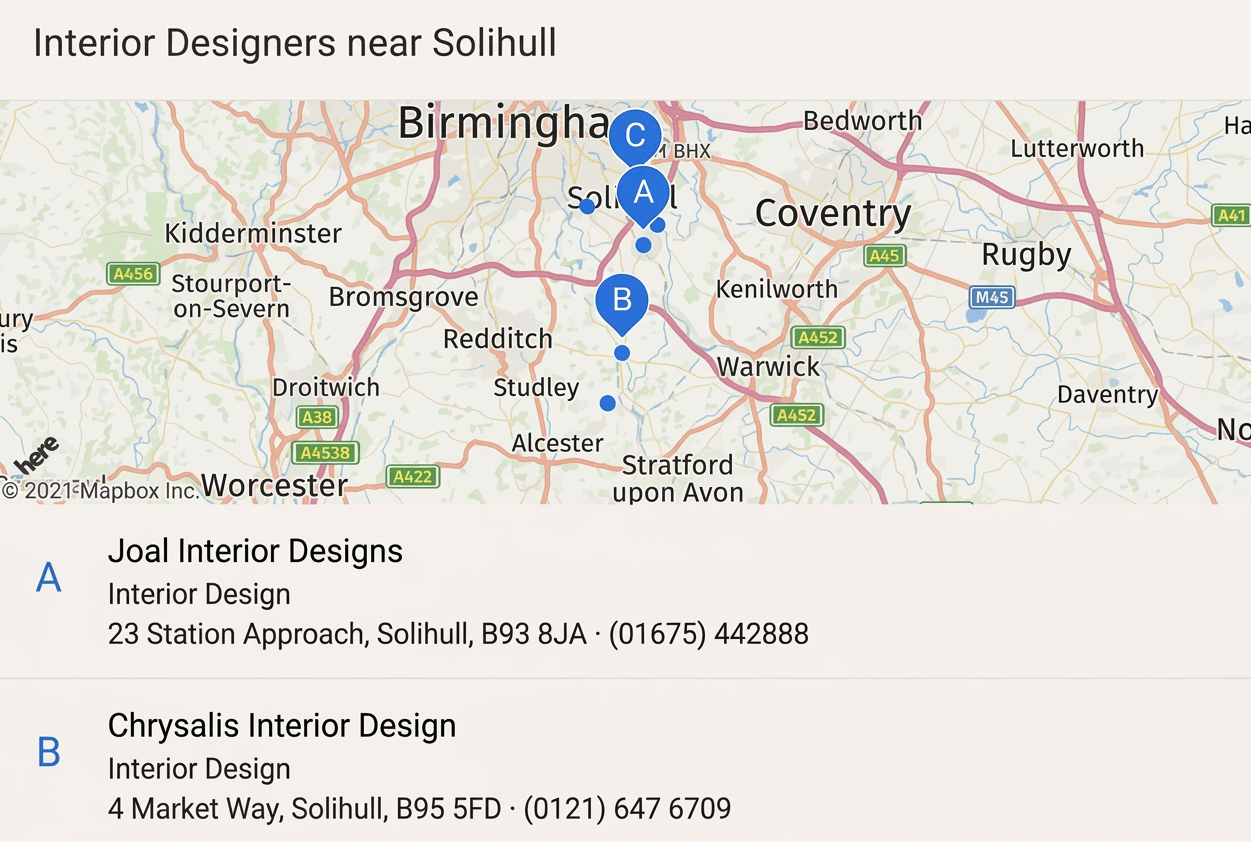
Claiming your Google Business Profile is the most important action you can take to optimise your ranking for Google’s local pack results and organic results because it literally puts you on the map.
Read ‘Local SEO Complete Guide: 2026’ for a full comprehensive step-by-step, guide, packed with tips for beginners. Start by registering for Google Business. Following the steps outlined, will go a long way towards helping you boost your local rankings.
As a specialist directory, Houzz offers a free as well as a pro subscription and is dedicated to interior designer businesses so check out how to create a free business account on Houzz. Not only do you earn referrals from local directory listings, but you also benefit from their SEO since they tend to rank highly.
Super Blogs: Interior Design Content Writing Gold
The next step is writing content targeted towards your niche keywords that align with your core service offers. Find natural ways to add them into your headers, tags and blogs. Whoever said 'content is king', (Bill Gates in 1996), was right and today it rings truer than ever, even with the emergence of AI search, but it's essential to prioritise quality over quantity. If you want to rank highly on Google, if you want organic traffic to discover your website without paid ads, content writing is key. Take a look at the stats on Google Analytics (free to set up) to see the evidence. Blogs can be the single greatest driver of traffic, often exceeding home page content. The results can be surprising. SEO will keep your website visible, pulling in fresh traffic from popular searches. Let it do the hard work for you.
60% of marketers say that inbound marketing (SEO content, etc) is their best source of high-quality leads, according to HubSpot.
Long-form SEO blogs have the potential to become ‘evergreen’ meaning they will continue to attract traffic, long after the blog is published. Whilst paid ads generate short-term leads, useful for promoting live launches or short-term offers, the cost can soon add up. So lay some solid foundational pillars that will serve you for the long-term, creating passive sales without the daily social posting.
SEO drives 1,000% more traffic than organic social media, according to BrightEdge.
An estimated 70% of online marketers say that SEO is better than PPC for generating sales, according to Databox.
Curating one long-form blog packed with SEO keywords for visibility, allows you to create multiple quotes and social media posts which can be repurposed for many platforms including Instagram reels and carousel tips.

Repurpose your strategic content to optimise reach. It keeps your entire marketing strategy cohesive with repetitive messages that make you memorable.
Your blog content may be revamped for a live video, reel or podcast.
Purposeful blogs create a snowball effect that sparks countless ideas for new content, simply by getting clear on direction.
Neil Patel, co-founder of NP Digital, puts it well: having more traffic isn't everything. Your goal should be to attract the right type of traffic.

Don't just write content to get more visitors — write content that speaks directly to your ideal client's needs, and focus on revenue over traffic.
The message is clear. Some traffic works harder than others. Long-form content fares better for SEO opportunities, so it’s worth including alongside your regular content as your core content pillars.
If you’ve been feeling drained by social media, take a moment to get back to basics with strategic content. For optimal results, focus on super blogs that align with both your ideal client’s search intent AND your core services, extracting key points for multiple social posts.
Written by Jane Eley
Freelance Interiors Copywriter
Found this blog useful? Why not bookmark it for future reference?
Jane Eley is a freelance copywriter specialising in interiors and lifestyle brands. She helps interior designers and home retailers attract more clients through strategic, search-optimised content. Enquire about working with Jane.
For information on different types of content writing for interiors brands, read Content Writing for Interior Design Marketing: 4 Ways to Boost Sales. Looking for help with Local SEO? Read Local SEO for Interior Designers: The Complete 2026 Guide